

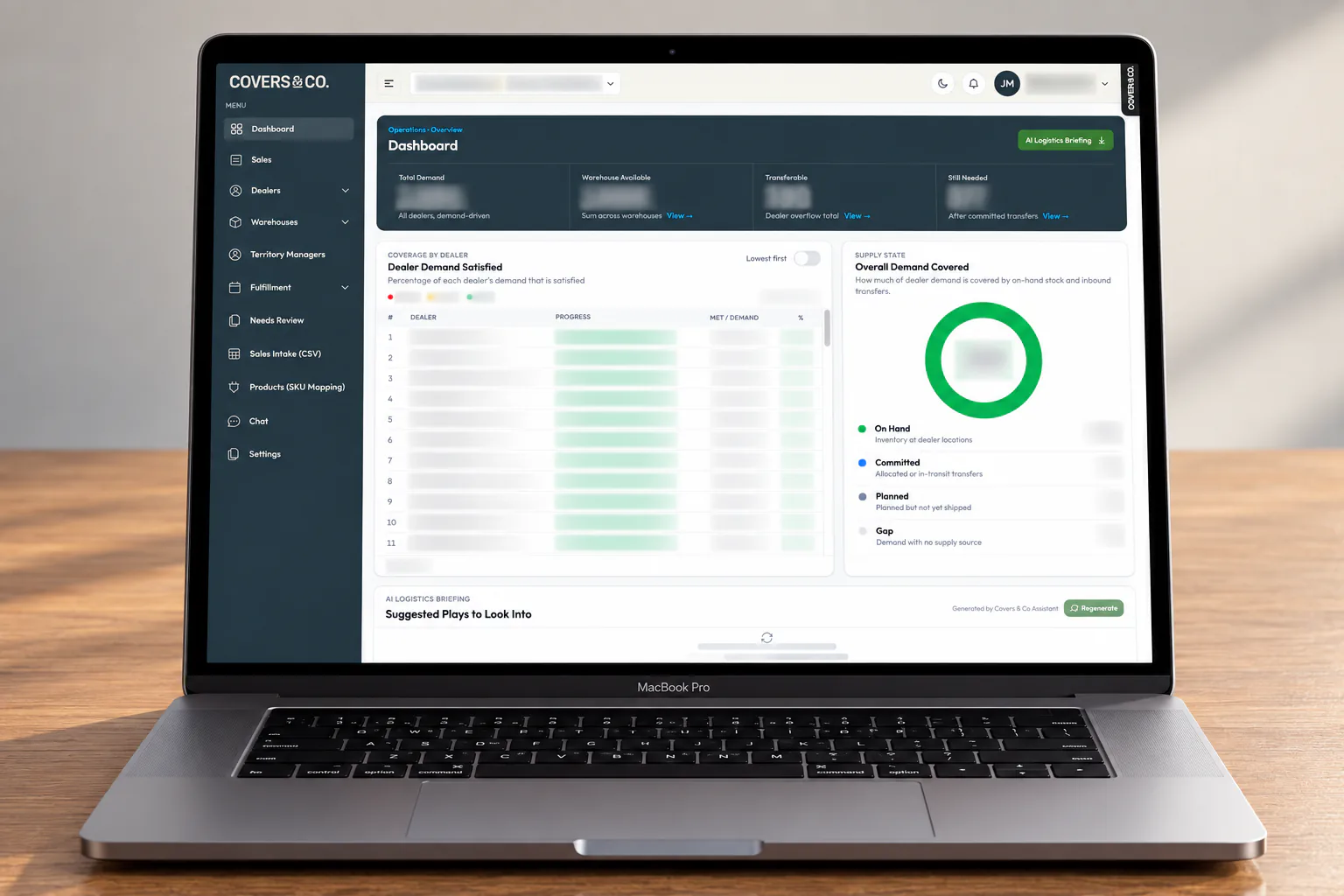
A spreadsheet only one person understands. One app for bookings, another for invoices, a group chat for everything else. And someone on your team whose job has turned into moving information between them.
Nobody planned it that way. It just piled up. Most days, it works. Until the one person who understands the spreadsheet takes a week off.
None of that is what customers come to you for. They come for the work, and for how you look after them while you do it. Every hour you spend fighting your tools is an hour your customers don’t get.
Your way of working is worth keeping
The way you do things is part of what makes you good. Off-the-shelf software is built for the average business, so it asks you to work like one. That’s fine for email and payroll. It’s not fine for the part of your business people recommend you for.
Your software can wait. First, I want to know the part you’d never let slide. The extra check before a job goes out. The handwritten note in every order. The call back the same day, even when it’s bad news.
That’s what the software has to protect. The rest is fair game.
Two trucks and a whiteboard
Take a small furnace company with two trucks. A call comes in. The quote goes in a spreadsheet. The job goes on the whiteboard. The address goes to the tech by text. That night, it all gets typed again for the invoice. One job, four places.
Customers stick with this company for something small. Every fall, before the first cold snap, the owner calls each customer to book their furnace check. In a busy year, those calls are the first thing to slip.
So the first phase fixes the retyping. The quote becomes the job, the job shows up on the tech’s phone and the invoice is ready when the work is done. Each job gets typed once.
And the fall calls? The owner still makes every one. The software just keeps the list. Nobody gets missed.
What you can hold us to
Whatever we build, these don’t change.
- We watch how the work moves before we build anything: what gets typed, where it goes and who waits on who.
- We build the piece that wastes the most time first and leave the nice-to-haves for later.
- You sign off on each phase before we start it.
- Your team tries each piece as it’s built, and we adjust it to how they work.
- You talk to the people building it the whole way through.
- You own it, with no per-seat fees and no features locked behind the next plan.
When your business changes, the software can change with it. And you’ll be calling people who already know how it works.
The kinds of things we build
We don’t have a product to sell you. We start with the problem and build what fixes it. Sometimes that’s a full platform. Sometimes it’s one small tool your team opens every morning.
The tools that already work can stay. If your accounting software does its job, we’ll look at connecting to it before anyone talks about replacing it.
- Web apps that replace the spreadsheet you’ve outgrown
- Portals where clients, staff or suppliers can check things themselves
- Dashboards and reports that put your numbers in one place
- Quoting, booking and scheduling tools that follow your steps
- Integrations and automations, so nothing gets typed twice
- A product of your own, like a marketplace or subscription software
Don’t see yours on the list? Good. Most of the best projects aren’t.
Custom software, or a smarter setup?
Not every small business needs custom software. Sometimes the fix is a setting nobody turned on, or one integration between two apps you already pay for. If that’s all you need, we’ll say so.
Custom makes sense when doing it your way is part of what people pay you for. When you’ve said “the software won’t let us do that” more than once. When your workarounds have workarounds.
Starting from an idea for a product of your own? That works too. We’ll help you figure out what’s worth building first.
Want to go deeper? See how we approach App Development, or browse our recent work.

Walk us through a typical week.
Where the time goes, and the parts you’d never let slide. We’ll tell you straight if custom makes sense, or if there’s a simpler fix.